How Certification Standards Shape Slot Availability for Swiss Players
Quinn Hughes · Oct 12, 2026
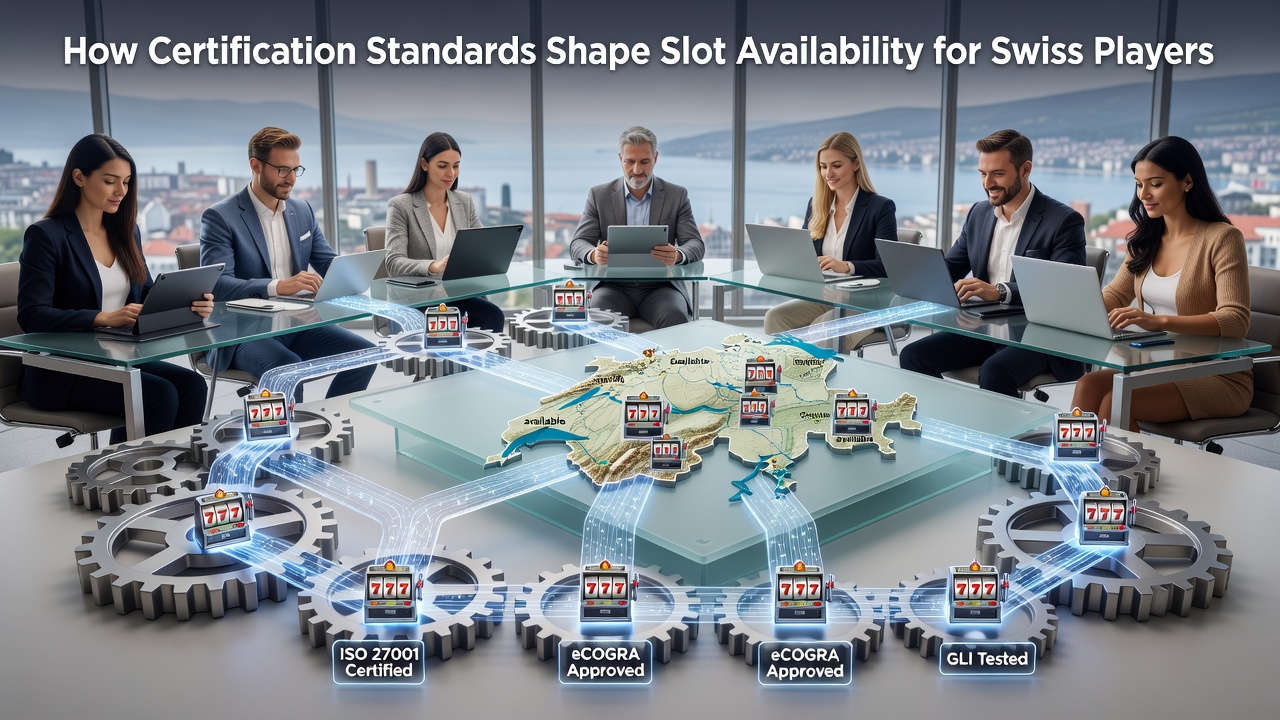
How Certification Standards Shape Slot Availability for Swiss Players
Swiss gambling regulations rest on a federal framework that requires every slot machine to meet precise technical and fairness criteria before operators can make it available to players, and these certification standards directly determine which games reach Swiss casinos and online platforms. The process begins with independent testing laboratories that evaluate random number generators, return-to-player percentages, and security protocols, after which approved machines receive official certification that allows legal distribution across the country.
Regulatory Framework Governing Slot Certification
Switzerland's Federal Act on Gambling and the associated ordinances assign oversight to the Swiss Federal Gaming Board along with cantonal authorities, and these bodies enforce uniform certification requirements that apply equally to land-based venues and licensed online operators. Data from regulatory filings show that only machines passing tests for mathematical fairness and anti-manipulation safeguards receive approval, which narrows the pool of available titles compared with less regulated markets. Observers note that updates to these standards occur periodically, with a new set of technical guidelines scheduled for implementation in October 2026 that will introduce enhanced encryption benchmarks for digital slots.
Testing Procedures and Laboratory Accreditation
Accredited laboratories conduct multi-stage evaluations that include simulation runs exceeding millions of spins, verification of payout accuracy, and checks against player protection features such as session limits and loss caps. Research indicates that manufacturers must submit source code and hardware specifications for review, and any deviation from certified parameters results in immediate withdrawal of approval. This rigorous sequence ensures that only compliant slots enter circulation, yet it also creates a bottleneck that delays the launch of new games until all documentation clears the review process.
Effects on Land-Based Casino Offerings
Casinos operating under Swiss licenses must stock only certified equipment, which means floor managers select from a pre-approved catalog rather than the full range of international releases. Figures reveal that larger venues in major cities maintain inventories of several hundred machines, while smaller establishments operate with fewer options because each unit requires separate certification fees and ongoing compliance audits. When a popular title fails to meet updated security protocols, operators replace it promptly, which explains why certain international hits appear months later in Switzerland or never appear at all.
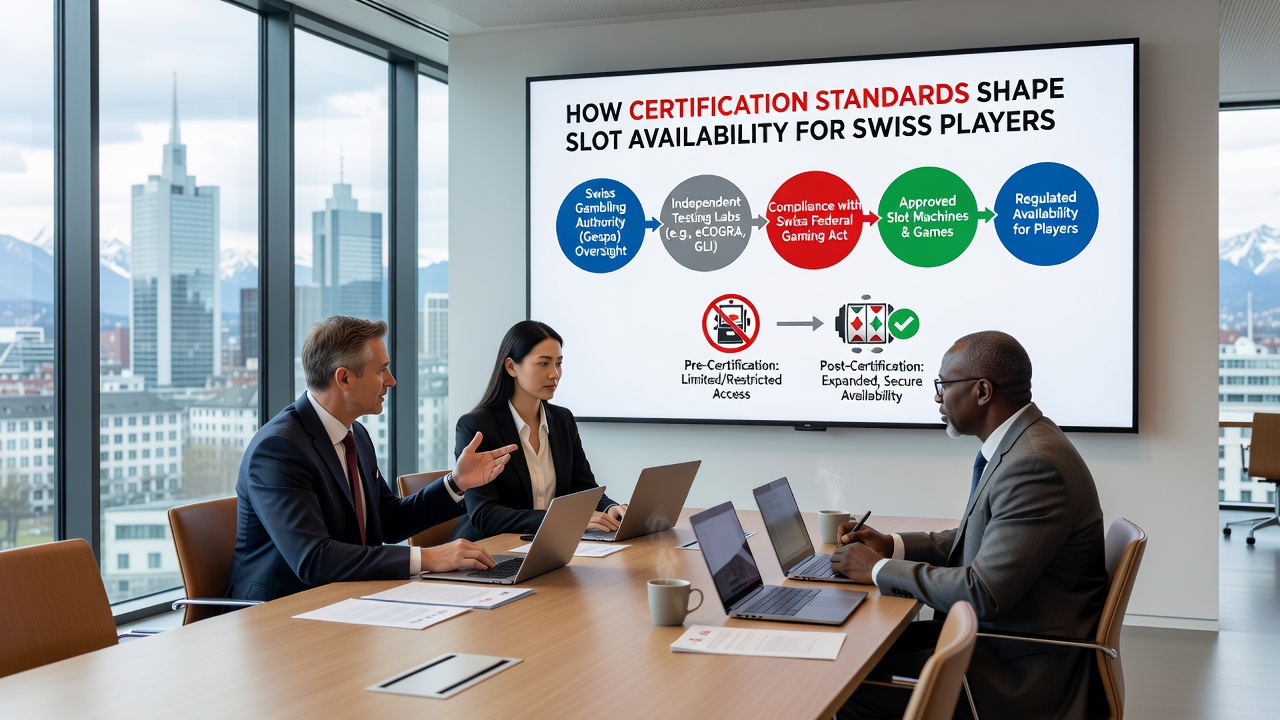
Online Platform Constraints and Cross-Border Considerations
Licensed Swiss online operators face identical certification hurdles, and their game libraries therefore reflect only titles that have cleared domestic testing rather than the broader selections found on foreign sites. According to industry reports from the European Gaming and Betting Association, this alignment with national standards reduces the total number of available slots by an estimated thirty percent compared with unregulated markets. Players who access certified platforms encounter consistent quality controls, but they also notice that some progressive jackpot networks popular elsewhere remain unavailable until providers complete Swiss-specific adaptations.
Player Verification and Bonus Integration
Certification extends beyond hardware and software to encompass integration with national player verification systems, and these linkages ensure that bonus eligibility rules align with certified game parameters. Data compiled by the Swiss Federal Office of Justice shows that operators must log every certified slot's performance metrics, which feeds into broader responsible gaming monitoring programs. As a result, promotional offers tied to specific machines appear only after regulators confirm the title meets all fairness thresholds, creating a direct connection between certification status and the bonuses Swiss players can access.
International Comparisons and Standards Evolution
Comparisons with other jurisdictions highlight Switzerland's emphasis on pre-market certification, whereas bodies such as the Nevada Gaming Control Board or Australia's National Standard for Gaming Machines allow faster approvals under different risk models. Research from university studies on European gambling markets indicates that stricter upfront testing correlates with lower incidence of technical disputes, although it extends the time from development to player availability. The upcoming October 2026 revisions will further harmonize Swiss requirements with emerging EU technical directives, which may expand the certified library over time as manufacturers adapt their production lines.
Manufacturers respond to these constraints by developing Switzerland-specific variants that incorporate required features from the outset, and this targeted approach reduces the number of global titles that reach Swiss players without modification. Evidence from licensing records demonstrates that certified slots maintain stable performance metrics across multiple years, supporting consistent availability once initial approval clears.
Conclusion
Certification standards function as the primary gatekeeper for slot availability in Switzerland by dictating which machines satisfy technical, security, and fairness criteria before legal deployment. Regulatory data and compliance statistics confirm that these requirements produce a controlled selection of games across both physical and digital channels, with periodic updates such as those planned for October 2026 continuing to refine the process. Players therefore encounter a curated range shaped directly by the certification pipeline rather than unrestricted market offerings.